

Fixing the bvostfus Python Issue: A Complete Guide
If you’re dealing with a bvostfus Python issue, you’re not alone. Many developers run into unexpected errors while working with Python projects.
Especially when dealing with custom modules, third-party integrations, or misconfigured environments.
These issues can be frustrating, but the good news is that most of them are easy to diagnose and fix with a structured approach.
Understanding the bvostfus Python Issue
The term bvostfus Python issue typically refers to errors that occur due to incorrect configurations, missing dependencies, or conflicts within the Python environment. Sometimes, it may also be linked to a specific script, package, or internal naming used in a project.
These issues can appear in different forms, such as:
- Import errors
- Module not found errors
- Runtime exceptions
- Compatibility issues
- Environment conflicts
Before jumping into solutions, it’s important to understand that Python errors usually provide helpful tracebacks. These tracebacks are your best friend when debugging.
Common Causes of bvostfus Python Issues
One of the most frequent causes is missing or improperly installed dependencies. If your project relies on external libraries and they are not installed correctly, Python will throw errors. Running commands like:
Another common reason is Python version mismatch. Some libraries work only with specific Python versions. If your system is running Python 3.11 but your project requires Python 3.8, errors are almost guaranteed.
Path issues are also a major culprit. If Python cannot locate your files or modules, it will fail to execute properly. This often happens when virtual environments are not activated or when project directories are misconfigured.
Understanding the bvostfus Python Issue
Start by checking your Python installation. Run:
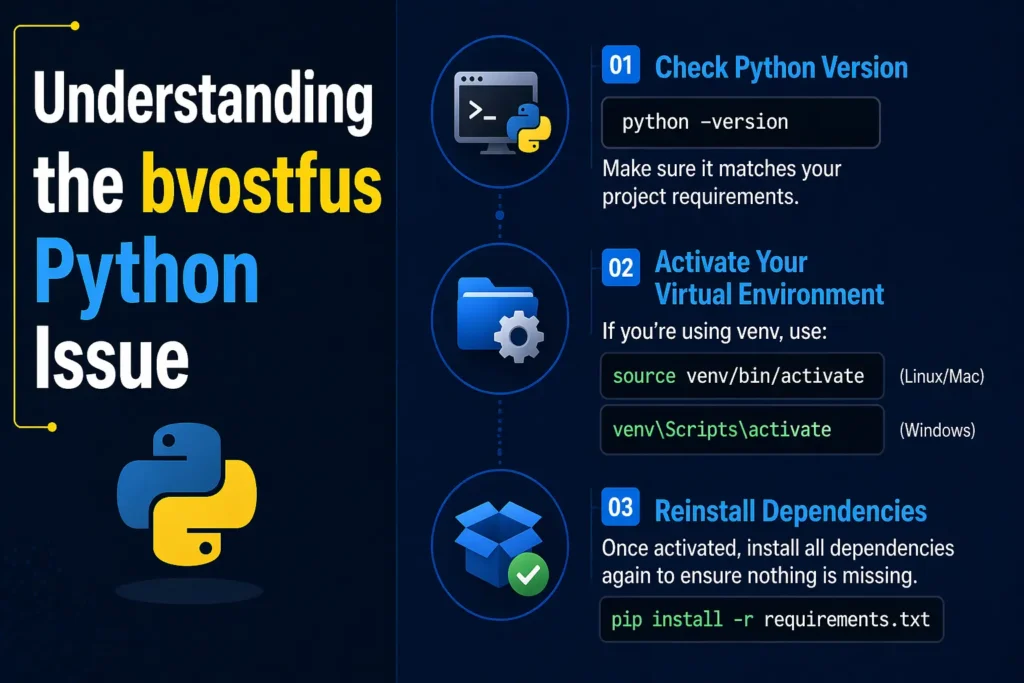
After that, carefully review the error message. Python tracebacks usually show the exact file and line number where the issue occurred. This helps you pinpoint the problem instead of guessing.
Updating and Managing Dependencies
Outdated packages can also trigger bvostfus Python issues. To fix this, update your libraries:
However, be cautious—updating everything blindly can sometimes create new conflicts. It’s better to maintain a controlled environment using tools like pip freeze to track working versions.
Fixing Environment Conflicts
Environment conflicts occur when multiple Python versions or packages interfere with each other. The best solution is to create a clean virtual environment:
python -m venv new_env
Then activate it and reinstall your dependencies. This ensures a fresh setup without hidden conflicts.
You can also use tools like virtualenv or conda for better environment management. These tools help isolate your projects and prevent cross-project dependency issues.
Debugging Tips for Faster Resolution
When dealing with a bvostfus Python issue, debugging smartly can save a lot of time. Here are some effective tips:
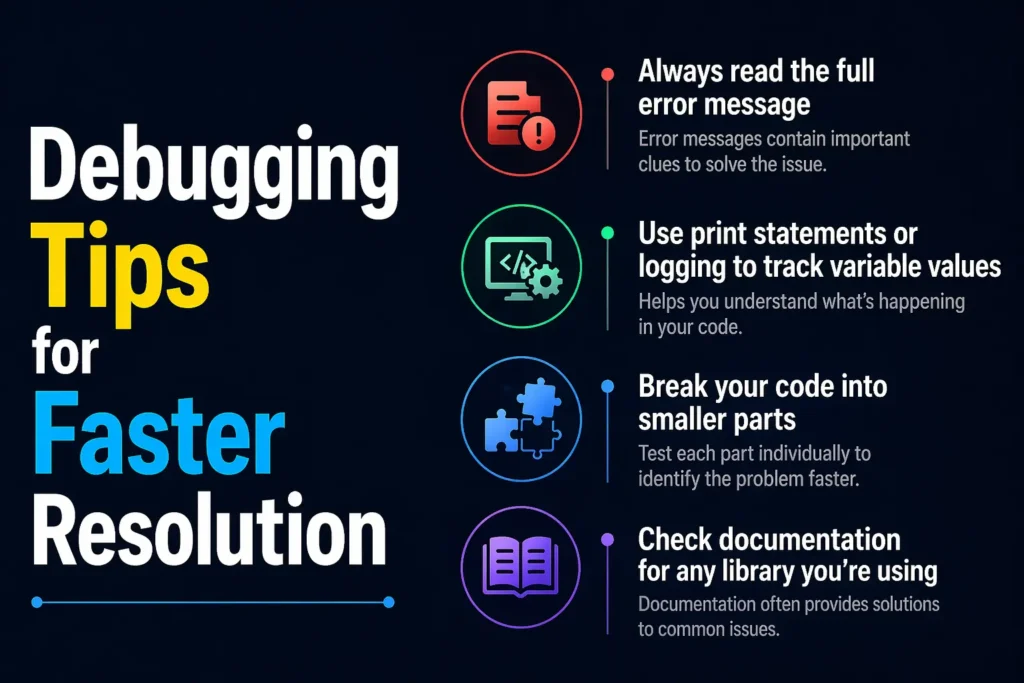
- Always read the full error message
- Use print statements or logging to track variable values
- Break your code into smaller parts and test individually
- Check documentation for any library you’re using
Sometimes the issue is not complex—it might just be a typo or incorrect indentation, which Python is very strict about.
Reinstalling Python as a Last Resort
If nothing works, reinstalling Python can solve deep-rooted issues. Completely uninstall Python from your system, download the latest stable version from the official website, and install it again.
After reinstalling, recreate your environment and install dependencies from scratch. This often resolves issues caused by corrupted installations or broken configurations.
Preventing Future bvostfus Python Issues
Prevention is always better than fixing errors repeatedly. Here are some best practices:
- Always use virtual environments
- Keep your dependencies organized
- Maintain a requirements.txt file
- Avoid mixing global and project-specific packages
- Regularly update your tools and libraries
Following these practices ensures a smoother development experience and reduces the chances of running into similar issues again.
Final Thoughts
The bvostfus Python issue might seem complicated at first, but in most cases, it comes down to simple problems like missing packages, environment misconfiguration, or version conflicts. By following a structured debugging approach, you can identify and fix the issue quickly.
Python is a powerful and flexible language, but it requires proper environment management. Once you get comfortable handling these common issues, you’ll find debugging much easier and more efficient.
Stick to best practices, stay organized, and don’t ignore error messages—they usually tell you exactly what’s wrong. With the right approach, even the most confusing bvostfus Python issues can be resolved without much stress.